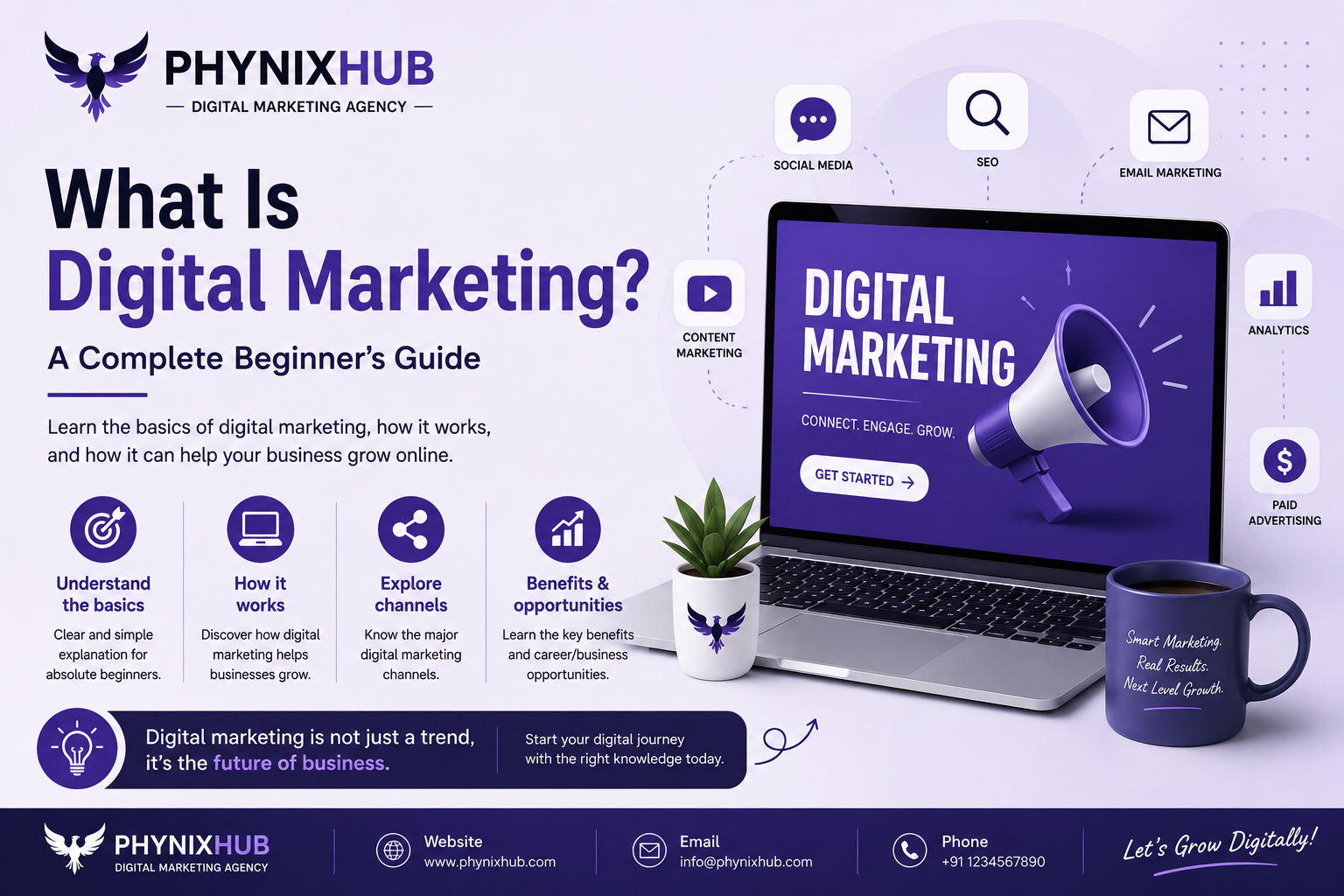
What Is Digital Marketing? A Complete Beginner’s Guide
In today’s digital world, businesses can no longer rely only on traditional marketing methods like newspapers, billboards, or flyers. Customers spend hours online every day—searching on Google, scrolling through social media, watching videos, and shopping online. This is where digital marketing becomes essential.Whether you’re a business owner, freelancer, student, or aspiring entrepreneur, understanding digital marketing is one of the most valuable skills you can learn in 2026.Let’s explore what digital marketing is, how it works, and why it’s important for every business.Type your paragraph here
What Is Digital Marketing?
Digital marketing is the process of promoting products or services using digital platforms such as: Websites Search Engines (Google, Bing) Social Media (Instagram, Facebook, LinkedIn, X) Email Mobile Apps YouTube Online AdvertisingIts primary goal is to connect businesses with their target audience, generate leads, increase sales, and build long-term customer relationships.Unlike traditional marketing, digital marketing allows businesses to reach people anywhere in the world while measuring every campaign’s performance.
Why Is Digital Marketing Important?
Today’s customers search online before making purchasing decisions. If your business doesn’t have an online presence, you’re missing valuable opportunities.Digital marketing helps businesses: Increase brand awareness Reach the right audience Generate quality leads Improve customer engagement Increase website traffic Boost online sales Build trust and credibility Achieve measurable resultsWhether you’re a startup or an established company, digital marketing helps you compete effectively in today’s market.
How Does Digital Marketing Work?
Digital marketing combines multiple online strategies to attract, engage, and convert customers.Here’s a simple process:
Step 1: Understand Your AudienceIdentify your ideal customers based on: Age Location Interests Buying behavior Problems they want to solve
Step 2: Build Your Online PresenceCreate professional digital assets such as: Business website Google Business Profile Social media accounts Landing page
step 3: Create Valuable ContentShare content that educates, informs, or entertains your audience.Examples include: Blog articles Videos Social media posts Infographics Email newsletters
Step 4: Drive TrafficBring visitors to your website using: SEO Social media Paid advertising Email marketing Referral marketing
Step 5: Convert Visitors into CustomersOptimize your website with: Clear call-to-action buttons Contact forms Fast loading speed Mobile-friendly design Easy navigation
Step 6: Analyze and ImproveUse tools like Google Analytics and Search Console to measure performance and improve future campaigns.
Benefits of Digital Marketing
Digital marketing offers several advantages over traditional marketing.
Cost-Effective
Small businesses can compete with larger companies without spending huge budgets.
Global Reach
Your business can attract customers from around the world.
Measurable Results
Track clicks, conversions, impressions, and sales in real time.Better
TargetingReach
people based on age, interests, location, behavior, and demographics.
Higher ROI
Well-planned digital campaigns often deliver better returns than traditional advertising.
The Future of Digital Marketing
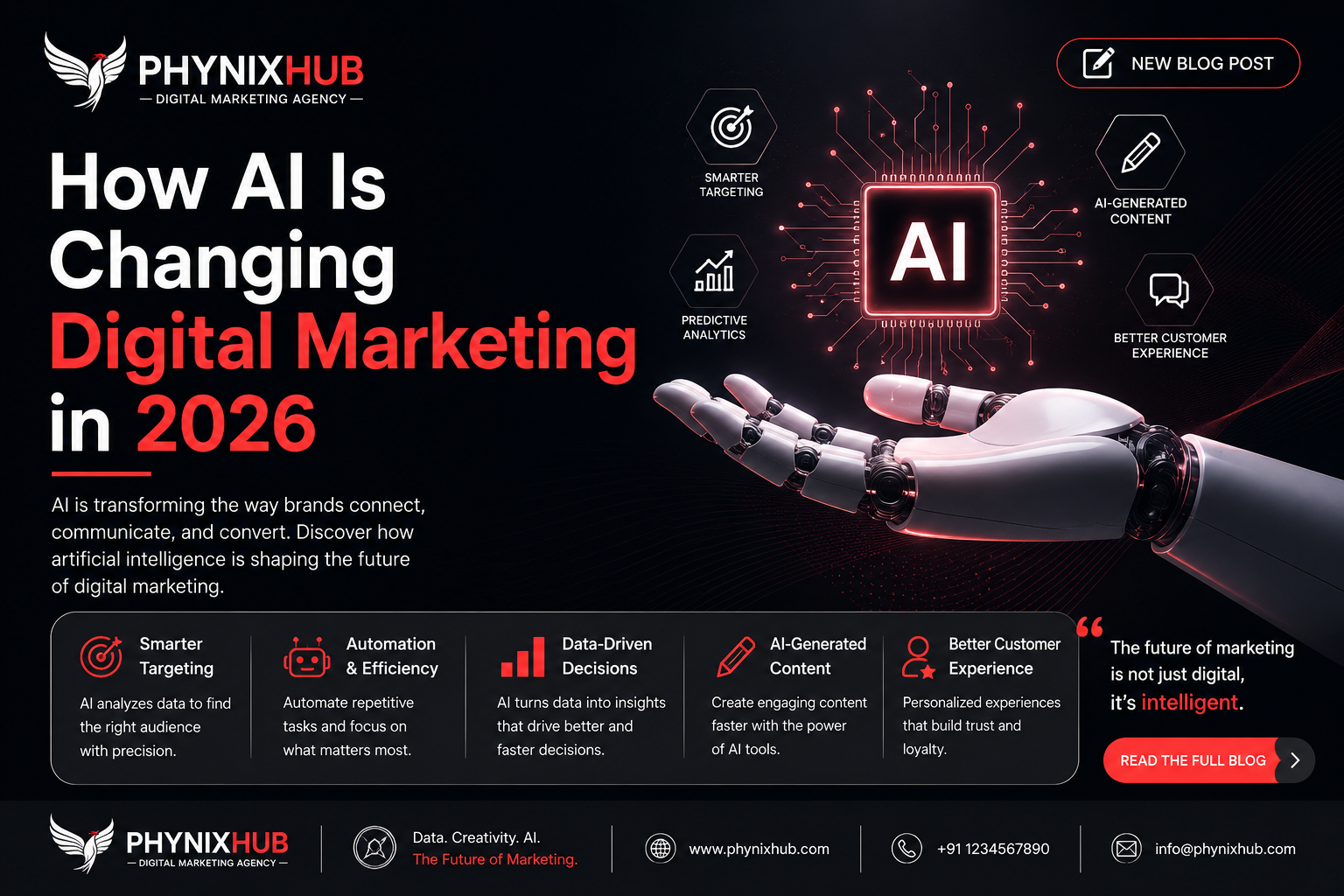
Digital marketing is evolving rapidly with technologies like artificial intelligence, automation, voice search, and personalized customer experiences.Businesses that embrace these changes will be better positioned to attract customers, build stronger brands, and grow sustainably in the years ahead.
Final Thoughts
Digital marketing is no longer optional—it’s an essential part of growing a successful business. By understanding its core strategies and applying them consistently, businesses of all sizes can reach more customers, strengthen their online presence, and achieve long-term success
If you’re just getting started, focus on building a professional website, creating valuable content, improving your SEO, and engaging with your audience on social media. Small, consistent efforts can lead to significant results over time.

Leave a Reply